Frankfurt data centre construction: who actually builds it?
A week in May: Data Centre World, a skyline I cannot stop photographing, and the one question no panel had a slide for. Do we have the people to build what is on the slides?
Frankfurt builds more data centre capacity than any city in Europe except London, and almost nobody at Data Centre World this May could say who will do the building. I spent a week in the city in May: two days of sessions on power and cooling at the Messe, and one morning at the fence of a site in Dietzenbach where around fifty of our groundworkers and operators work. This is what the two rooms have to say to each other.
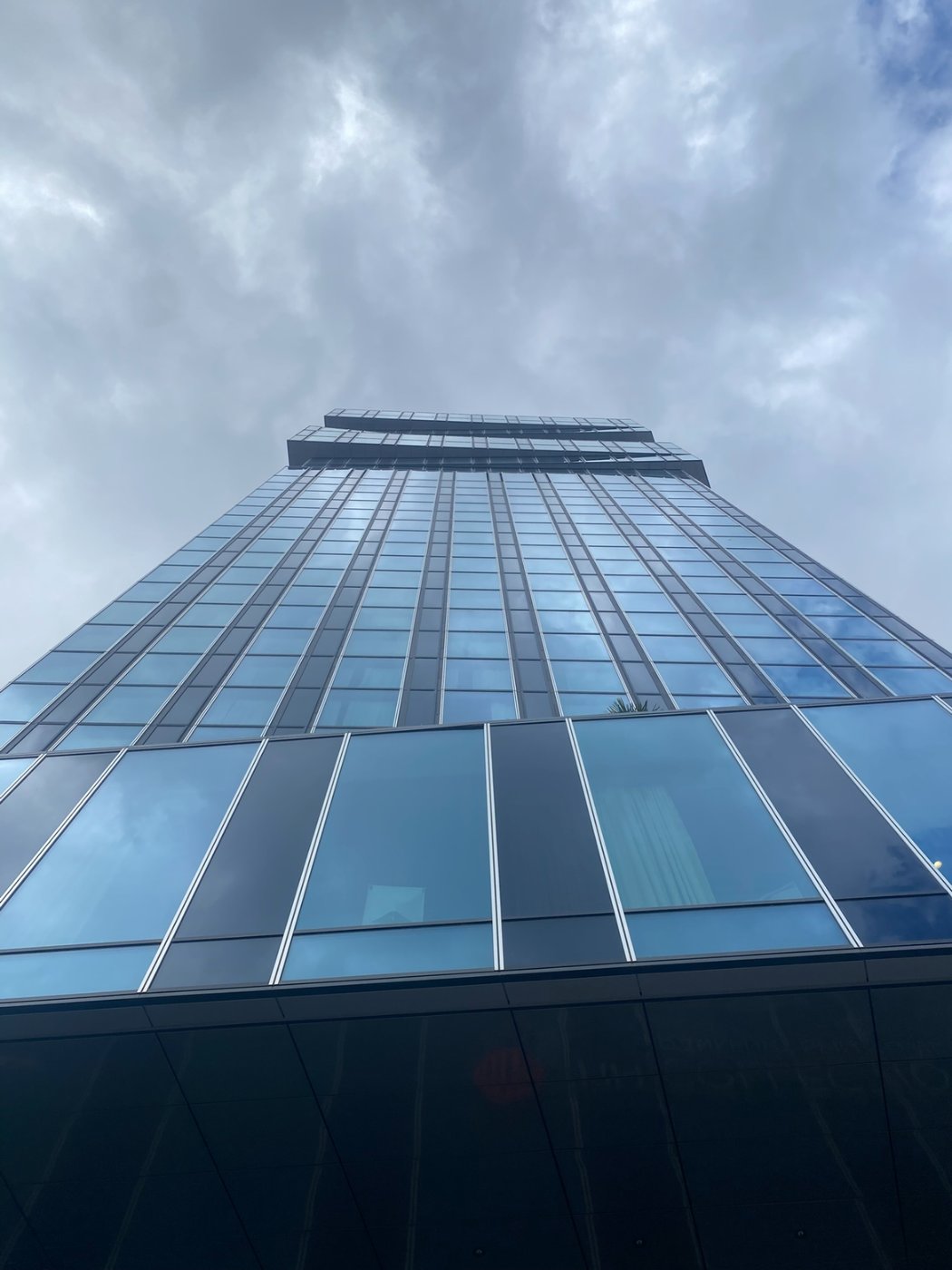
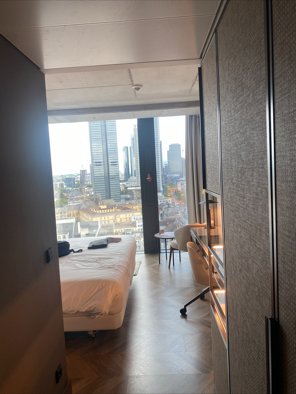
I have a weakness for skylines. Not the postcard kind; the kind you get standing at the foot of a tower with your neck bent back, trying to work out how many people it took to put the glass on. Frankfurt is the only city in Germany that gives you that feeling, and it is not a coincidence that it is also the city where a large part of Europe's internet physically lives. DE-CIX, the largest internet exchange in the world by traffic, sits under those streets. The banks came for the money. The data centres came for the fibre. I came for a week in May, for both.
What did Data Centre World Frankfurt 2026 actually say?
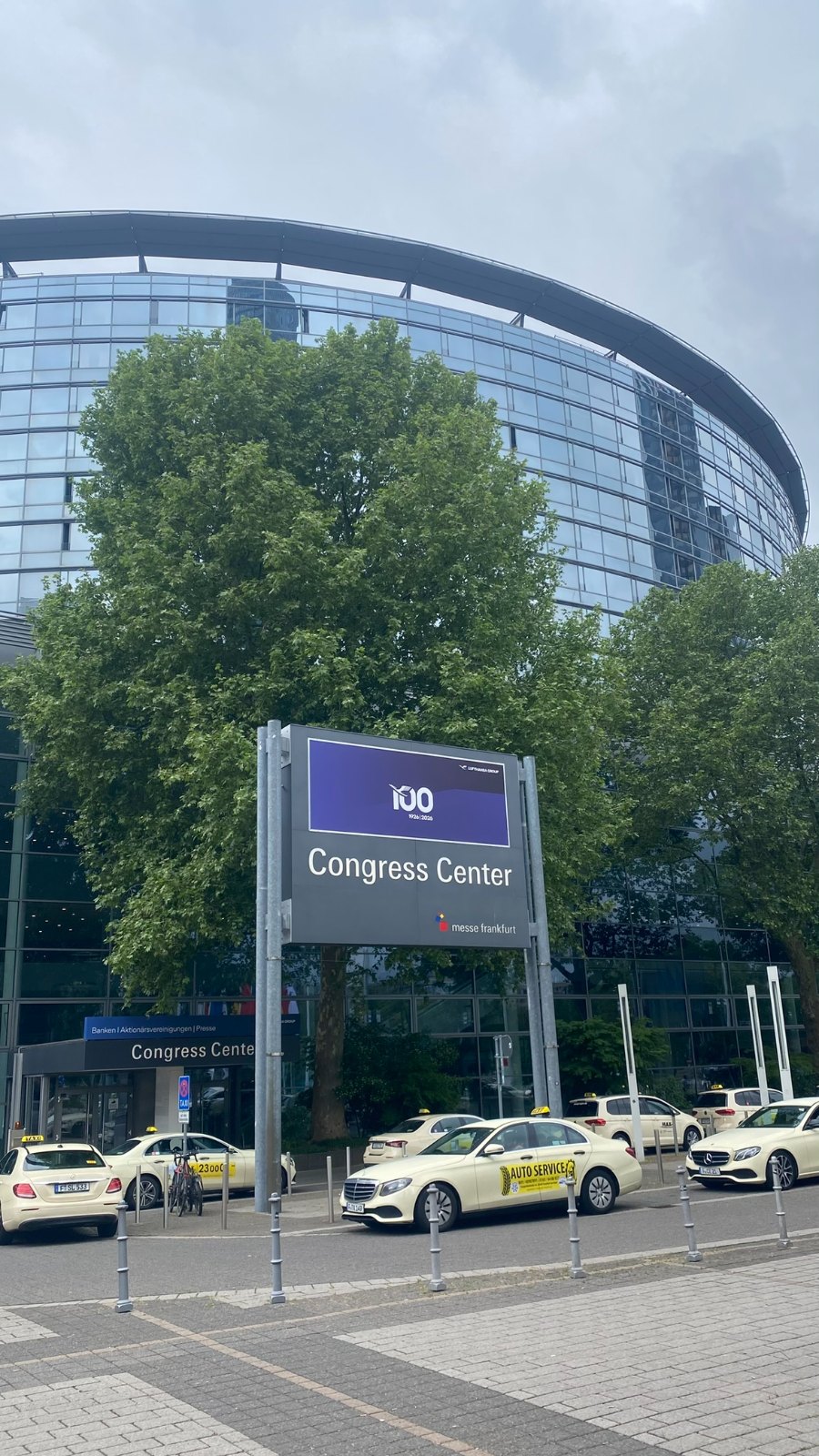
Data Centre World Frankfurt ran on 6 and 7 May at Messe Frankfurt, inside Tech Show Frankfurt, the biggest tech event in the German-speaking world. Several thousand people, a few hundred speakers, one hall full of cooling, power and switchgear. I was there for the panels, not the stands. The people who decide where the next campuses go were on stage saying things they would never put in a tender.
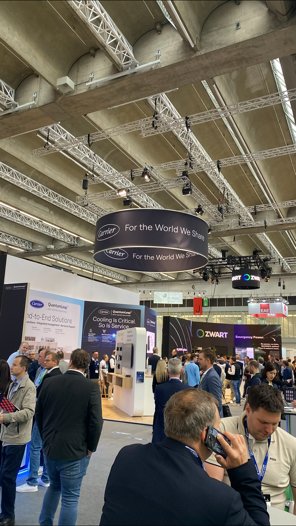
The story every session told was the same story from a different angle. Frankfurt is Europe's second data centre market after London, with the figures quoted on stage in the region of 750 megawatts live, 500 under construction and 400 in planning. And Frankfurt is running out of grid. Speaker after speaker put the wait for a high-voltage connection at three to five years and described the 110 kV network as saturated. Land in the Rhine-Main belt, Hanau, Hattersheim, Offenbach, Dietzenbach, is going the same way.
So the growth is spreading. Berlin is the clear number two, with campuses in the hundreds of megawatts coming online west of the city. Munich is next, on the back of the automotive and finance clusters. Then Hamburg, Düsseldorf, Cologne, and new sites along the Rhine south of Mainz. The consensus on stage was that German capacity doubles again by 2030. Nobody doubted the demand. Every slide was a line going up.
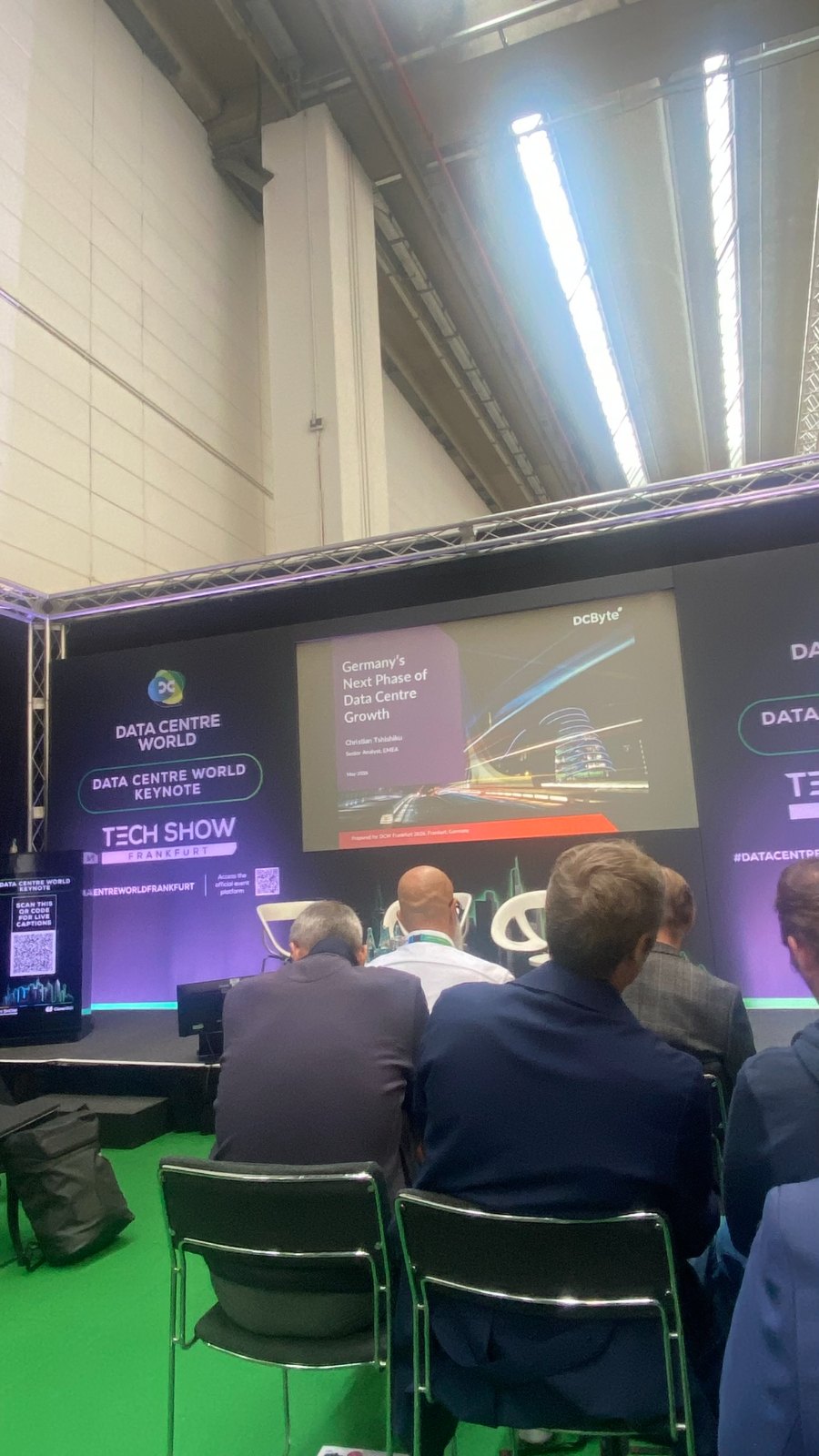
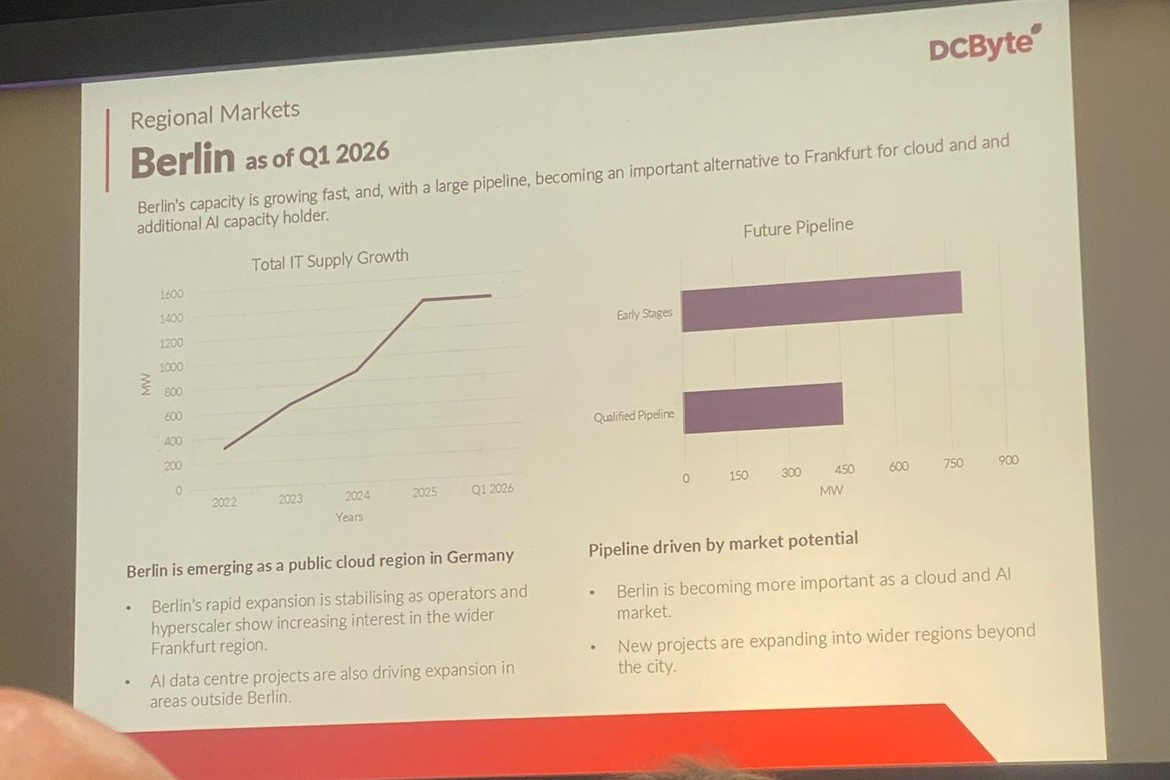
The keynote belonged to DC Byte. Christian Tshishiku, their senior analyst for EMEA, titled it Germany's Next Phase of Data Centre Growth, and the phrase did a lot of work. Phase one was Frankfurt, and it is largely built. Phase two is everywhere else. Two charts from that talk stayed in my notebook.
The first: Berlin's total IT supply, from under 400 megawatts in 2022 to around 1,600 by Q1 2026. A fourfold increase in four years, and the curve has only just started to flatten. The second: the future pipeline, with early-stage projects at roughly 750 megawatts and the qualified pipeline at 450. In DC Byte's words, Berlin is becoming an important alternative to Frankfurt for cloud and additional AI capacity, and new projects are expanding into wider regions beyond the city. The AI part matters: training clusters do not need to sit next to the exchange in Frankfurt, they need power and land, and Brandenburg has both.
Does Germany have the workforce to build its data centres?
It came up in a panel on the second afternoon, almost as an aside, and then it would not go away. Do we have the workforce to build all of this? Frankfurt, Berlin, Munich, Hamburg, all at once, all on the same three-year timeline, all needing groundworkers, steel fixers, electricians, pipefitters, commissioning engineers, in numbers the German construction sector has never had to produce for one asset class. The room went quiet in the way rooms do when the honest answer is no.
Do we have the people to build what is on these slides? Nobody on stage had a chart for that. It is the reason I was in the room.
That question is my whole business. Power, land and capital have names attached to them: utilities, developers, funds. Labour does not. It is assumed. It shows up in a cost line called "installation" and then, on site, it turns out to be six men in a van who need a contract, a bed and someone who answers the phone on a Sunday. I have written down what one of those men actually costs in Germany, and what SOKA-BAU does to that number.
What a data centre site in Dietzenbach looks like at six in the morning
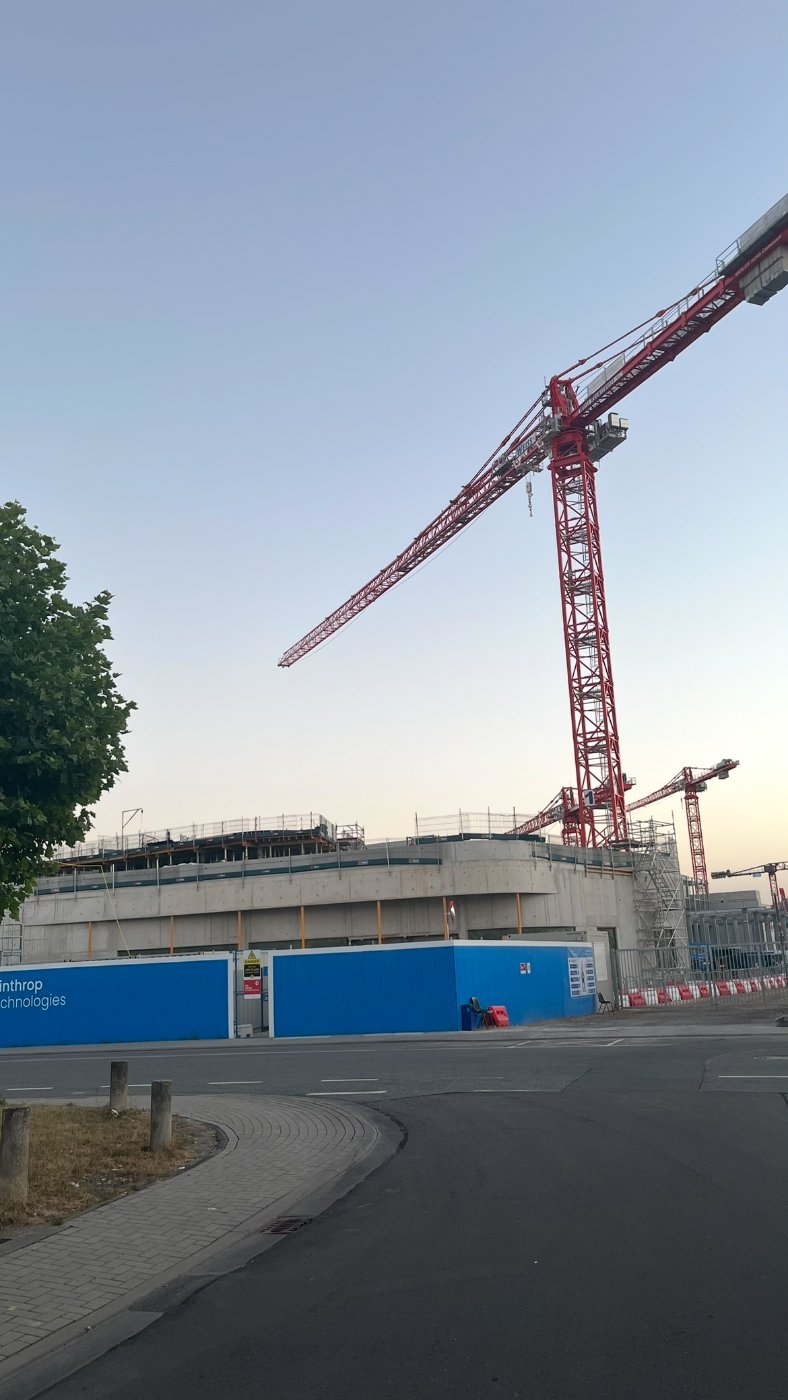
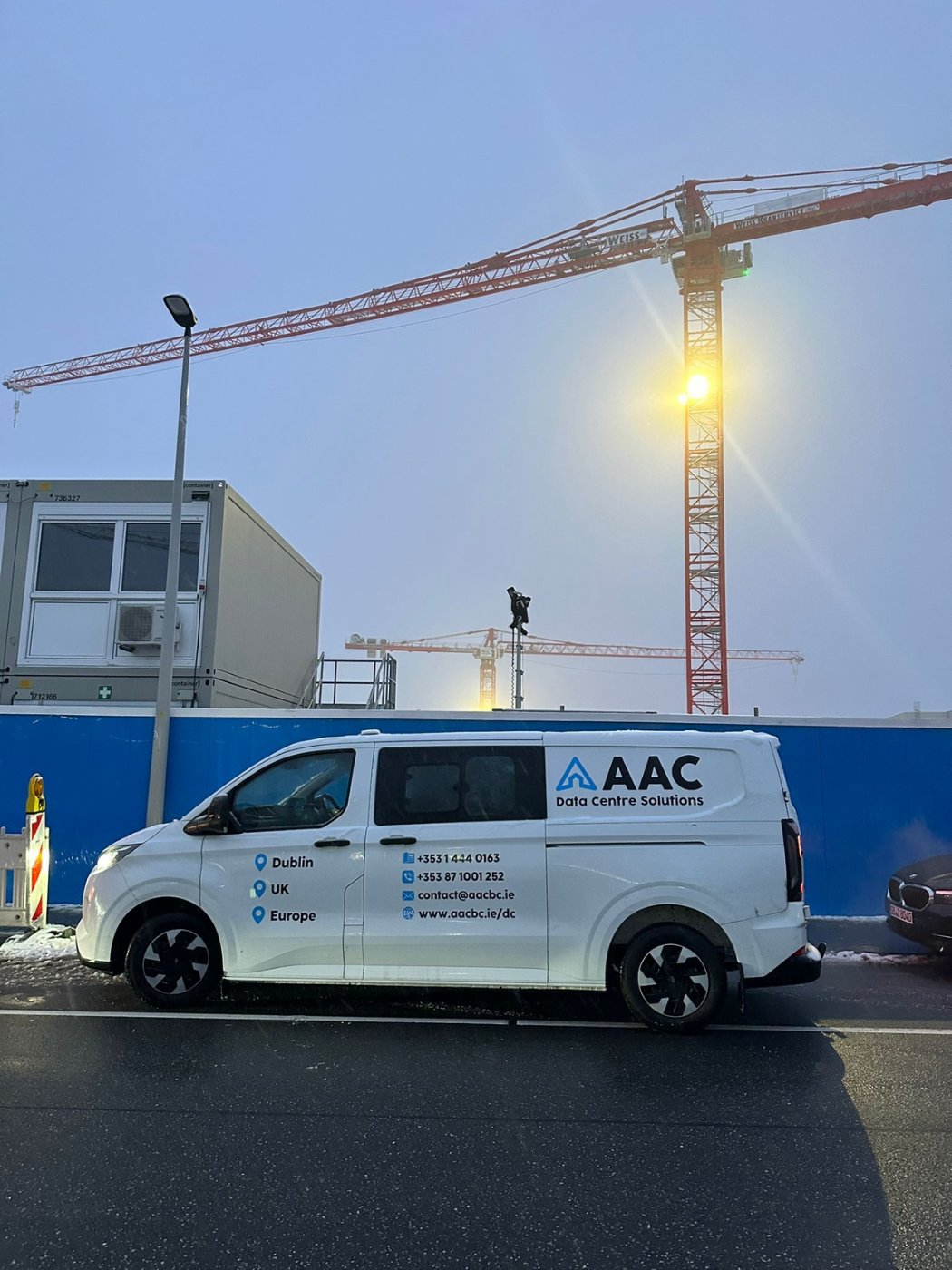
So on one of the mornings I skipped the fair and drove out to the second Frankfurt before it got light. Dietzenbach first: a Winthrop hoarding, three cranes, a shell of concrete that will be a hyperscale hall by next summer, and our van at the gate under a tower crane with its light still on in the fog. Six in the morning; our groundworkers would be inside the fence by seven. Then back towards the city, past a second site where precast columns were going up like a forest, seen from the car window.
Why we incorporated a GmbH in Frankfurt
The Rhine-Main region is where we have put our weight. Around fifty groundworkers, operators and supervisors on data centre sites between Frankfurt and Dietzenbach, housed in the towns around them, driven to the gate every morning in vans like that one. It is the largest concentration of our people anywhere, and it is the reason we spent this summer incorporating a German GmbH in Frankfurt instead of continuing to post people from Ireland. A local company, German contracts, a German office: not only because the rules demand it, though they do, but because the clients who decide the next phase want a supplier who is in the room, on the same payroll system, at the same Finanzamt. Closer to the client, closer to the site, closer to the men.
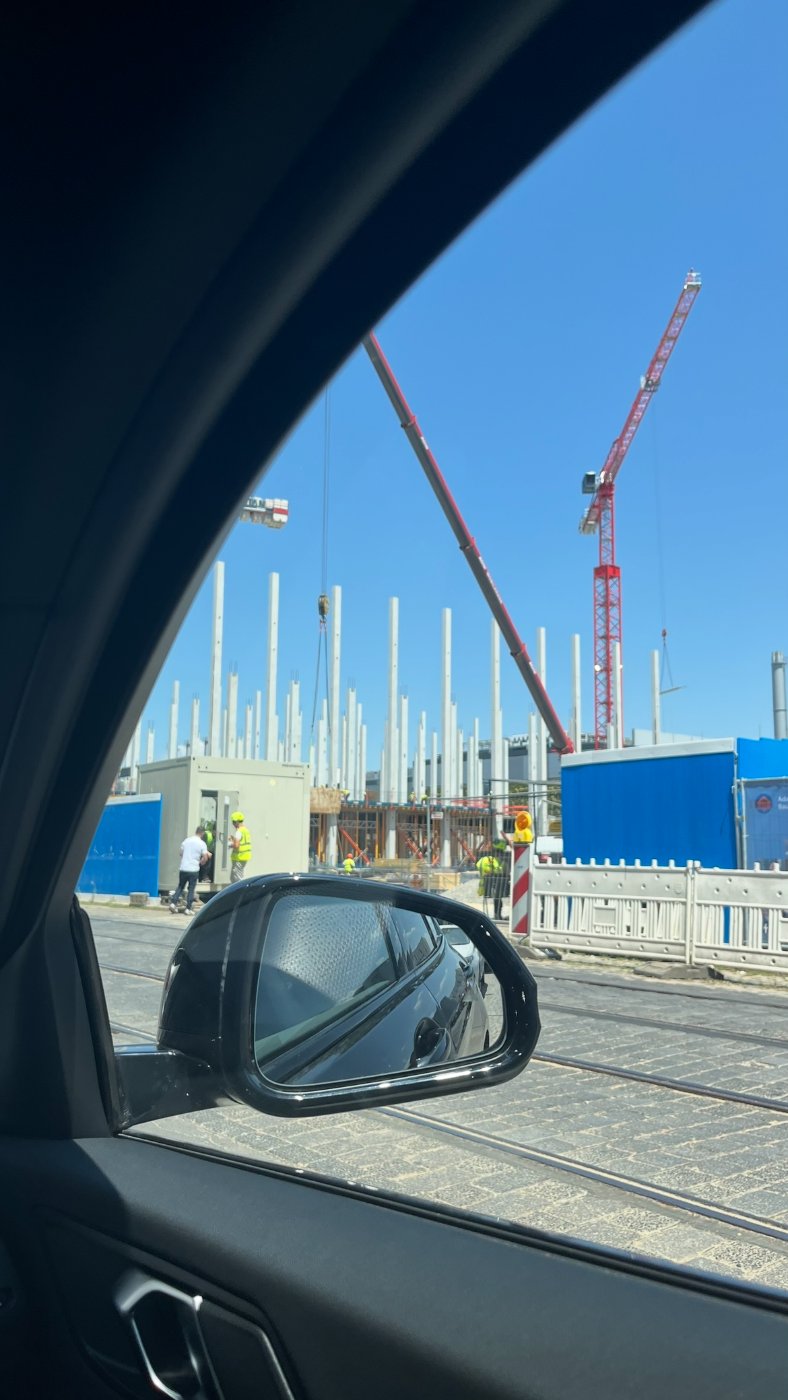
The fog in these photos is not a mood. It is six in the morning in Hesse in the season when the work starts before the light does. The plan for the region is not small: the demand on those slides is real, the grid constraint is real, and the labour constraint is the one nobody has a plan for yet. We intend to be that plan, first here, then wherever the next 300 megawatts land.
The distance between the slide and the crane
That distance is our business. The people at the Messe decide capacity in megawatts. The people at the fence deliver it in man-hours. Almost nobody works in both rooms, which is why the industry keeps being surprised that it has more money than hands. I go to the fair to learn where the cranes will be in two years. I go to the fence to make sure there are people under them.
Berlin, then. I have started making calls.