How to hire groundworks crews for a data centre in Germany
Nine firms out of ten get German crew supply wrong, on compliance, on cost, or on retention. Here is how it actually works: A1 versus local, what SOKA-BAU does to the number, and the five questions that separate a supplier who delivers from one who does not.
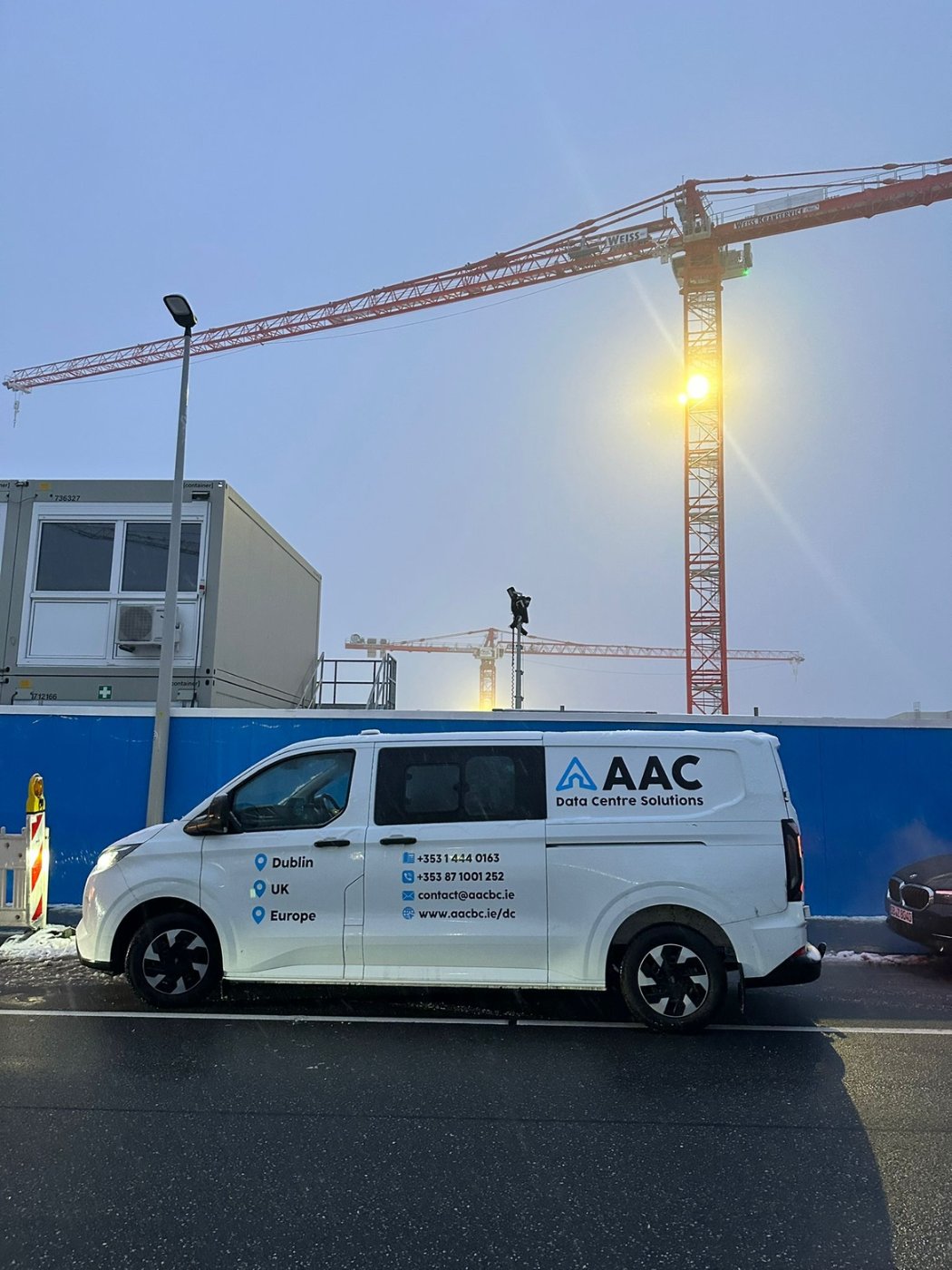
Nine out of ten firms get crew supply in Germany wrong. Not on the men, the men are fine. They get it wrong on the three things the client never sees until it is too late: compliance, cost and retention. I know, because I incorporated a GmbH in Frankfurt specifically so we would stop getting them wrong. This is how hiring groundworks crews for a German data centre actually works, from someone who does it every week, not from a brochure.
A1 posting versus local employment, and why it decides everything
There are two ways to put a foreign crew on a German site. You post them from another country on A1 forms, keeping them on, say, an Irish contract while they work in Germany. Or you employ them locally through a German company. A1 is faster to start and looks cheaper on day one. It is also the first thing a serious main contractor now asks about, because posted labour on a hyperscale site is a compliance risk they do not want on their audit. The hyperscalers and the tier-one contractors increasingly want a supplier with a German entity, German payroll and no posting surprises. That is not a preference. On the big data centre jobs it is becoming the entry ticket.
So the real question is not "can you get me men", it is "are they employed in a way that survives an audit". If your supplier is still posting everyone on A1 into a long German data centre project, you are the one carrying the risk, not them. We built a GmbH so our crews are employed locally, on German contracts, at the German Finanzamt, under the German construction agreement. It cost us a summer and four notaries. It is also the reason we get past the gate.
On a hyperscale site, "where are these men actually employed" is no longer a paperwork question. It is the question.
What SOKA-BAU does to the number
Here is where most people misprice a German crew. On top of the gross wage, construction employers pay into SOKA-BAU, the construction industry’s holiday and pension fund, plus BG BAU accident insurance, plus the statutory social charges. Together they add a large layer on top of what you think you are paying. A groundworker is not his net, and he is not even his gross. He is his gross plus SOKA plus BG BAU plus employer social cost, and if your supplier has not built that into the rate, one of two things is true: they are losing money, or they are not paying it. Both end badly for the client.
The honest version is that a compliant groundworker in Germany, housed and transported, costs real money, and a rate that looks too good means a corner is being cut somewhere you will discover at the worst moment. When we price a crew we start from the net the man will accept, gross it up correctly for the German system, add SOKA and BG BAU, add housing and transport, and only then put a margin on. That is why our rate is defensible line by line, and why it is not the cheapest quote you will get. The cheapest quote is almost always the one hiding the SOKA.
Why the crew that is cheap on day one is expensive by week six
The number that actually decides your cost is not the hourly rate. It is retention. A crew that changes every six weeks costs you a new induction, a lost shift, a supervisor training someone new, and a site manager asking why the faces at the gate keep changing. Everyone in the Rhine-Main belt pays roughly the same net. What keeps a crew on site for a year instead of six weeks is the thing the client never inspects: the house. Two men to a room, a kitchen six can cook in, a washing machine, forty minutes from the gate, and one phone number answered on a Sunday. Housing is not overhead. It is the cheapest retention tool there is, and it is decided by the labour supplier, not by you.
The five questions to ask any supplier before you hire
If you are a labour manager or a commercial director taking on a crew in Germany, a database of CVs proves nothing. Everyone has one. Ask these five things first, before you even look at the rate. One, are the men employed through a German entity or posted on A1, because on a long hyperscale job local wins. Two, where do SOKA-BAU and BG BAU sit in the rate, because if they cannot explain it, the number is wrong. Three, who houses the men, is it compliant, is it overcrowded, how far from the gate, and can they show you a photo. Four, who owns the van, because a crew that waits for a pickup at half past five is a crew that leaves. Five, who answers the phone on a Sunday, because when the boiler fails on a Saturday night the men should not wait until Monday for an email.
A supplier who has those five answers has the crew. A supplier who does not will have a different crew every two months, and you will be the one explaining that to your site manager.
Knowing the rules is the easy part
None of the above is secret. A good QS can read the SOKA tables. The hard part is not knowing the rules, it is standing up the whole apparatus behind them: the German entity, the payroll, the insurances, the housing within forty minutes of the gate, the vans, the foreman, the man who answers the phone on Sunday, all of it live before the first worker sets foot on site. That is the gap between understanding how it works and having a crew earning on Monday. It is a gap most suppliers never close, which is why the industry keeps being surprised that it has more money than hands.
We built our German operation to close exactly that gap: a GmbH in Frankfurt, around fifty groundworkers and operators on data centre sites between there and Dietzenbach, employed locally, housed to a standard, driven to the gate every morning. If you are building in Germany and the workforce is becoming the constraint, that is the problem I work on every day. Not a database. A crew on site, compliant, and still there in twelve months.